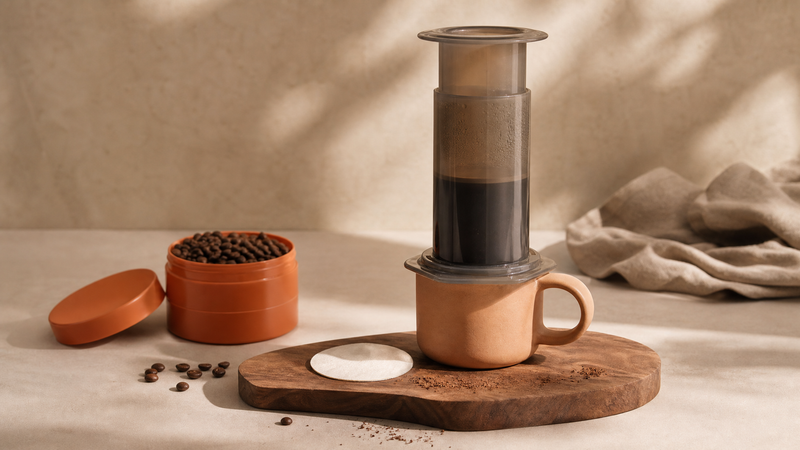
100 grams of coffee, ground coarse, steeped in 800 grams of cold water for 16 hours in the fridge. Strain, and you hold a week of concentrate. A ratio of 1:8, diluted one to one over ice. Cold brew is the only method here that asks for no skill at all, only foresight.
The method
Grind coarse, the texture of raw sugar. Combine coffee and cold filtered water in a jar, stir until nothing sits dry, and lid it.
Sixteen hours in the fridge. Eighteen will not hurt; twenty-four starts tasting woody. Strain through a fine sieve first, then again through a rinsed paper filter for a clean glass. Keep the concentrate lidded in the fridge and drink it within five days.
How much coffee
| Batch | Coffee | Water | Yields, diluted |
|---|---|---|---|
| Small | 50 g | 400 g | About 3 glasses |
| Standard | 100 g | 800 g | About 6 glasses |
| Large | 150 g | 1,200 g | About 9 glasses |
If the glass is wrong
Woody or dusty: steep shorter, or grind coarser. Sharp and thin: steep longer, or dilute less. Cloudy: strain again through paper, and pour the last centimetre away rather than chasing it.
Our coffees, cold
Cold extraction favours sweetness over acidity, so the naturals lead. Ethiopia Kayon turns into something close to fruit cordial. Sarawak Long Banga Honey, our honey-processed Liberica, leans into its brown sugar and coconut when brewed cold. Liberica changes as the glass warms, more than most arabica does.
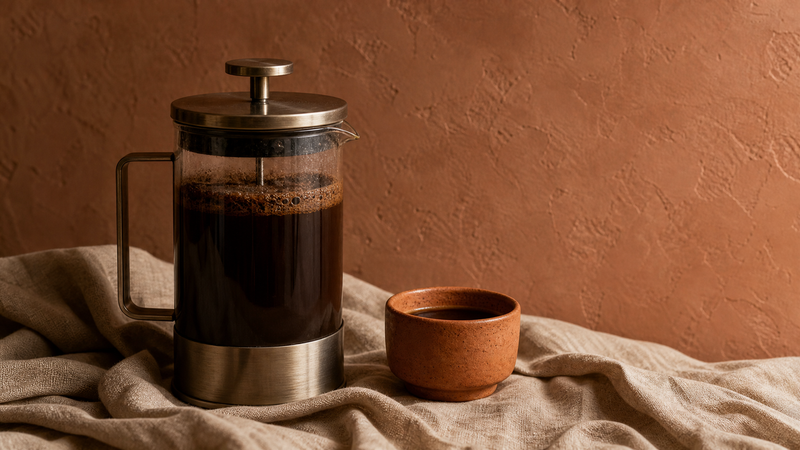
Cold brew is also the kindest landing for a bag past its peak week, though fresher is still better; the freshness piece explains the window. For the hot, slow equivalent, see the French press method. The frame for all of these is the ratio piece.