

The cleanest cup begins long before the roast.
You filter the water. You read the label on the olive oil before it goes in the trolley. Coffee is the thing most of us take in more often than either, and the one almost nobody checks. This page is what we found when we checked.
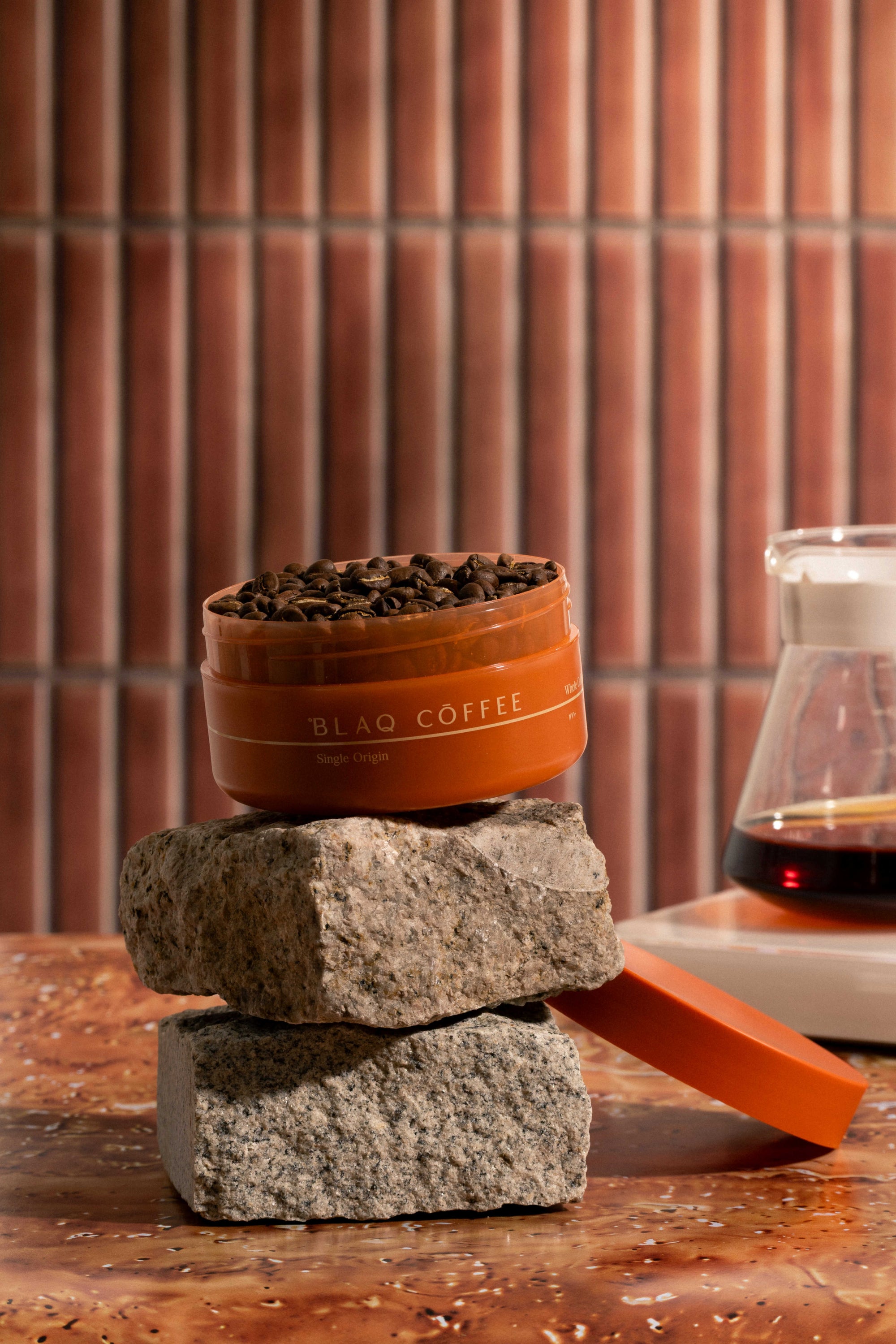
Most of us drink coffee every day. Very few of us ask what is in it.
Conventional coffee is grown with synthetic fertilisers, herbicides, and fungicides, applied to a plant that fruits in some of the wettest country on earth, where rust and borer arrive with the rain. Those inputs do not stop at the farm gate. They settle in the soil for seasons and run downhill into the water.
And they pass through the people who handle them. That is the part of the story that reaches a cup last, if it reaches it at all.
Organic is the decision to grow without any of that, and to have an independent auditor confirm it, year after year. It costs the farmer more, it yields less, and it narrows what a roaster our size can buy. We think the constraint is exactly the point.
It protects the ground.
Organic farms build soil instead of stripping it: compost, shade canopy, and cover crops in place of synthetic nitrogen. Living soil holds water and resists erosion. It keeps producing for the next generation of trees.
It protects the people.
Growing coffee should not mean handling concentrate without a mask. Certification takes that out of the job, for the grower and for the pickers who work the same rows.
It protects the cup.
A clean lot lets the origin speak. Jasmine, stone fruit, cane sugar: the things we taste for are easier to find in a lot grown without synthetic shortcuts.
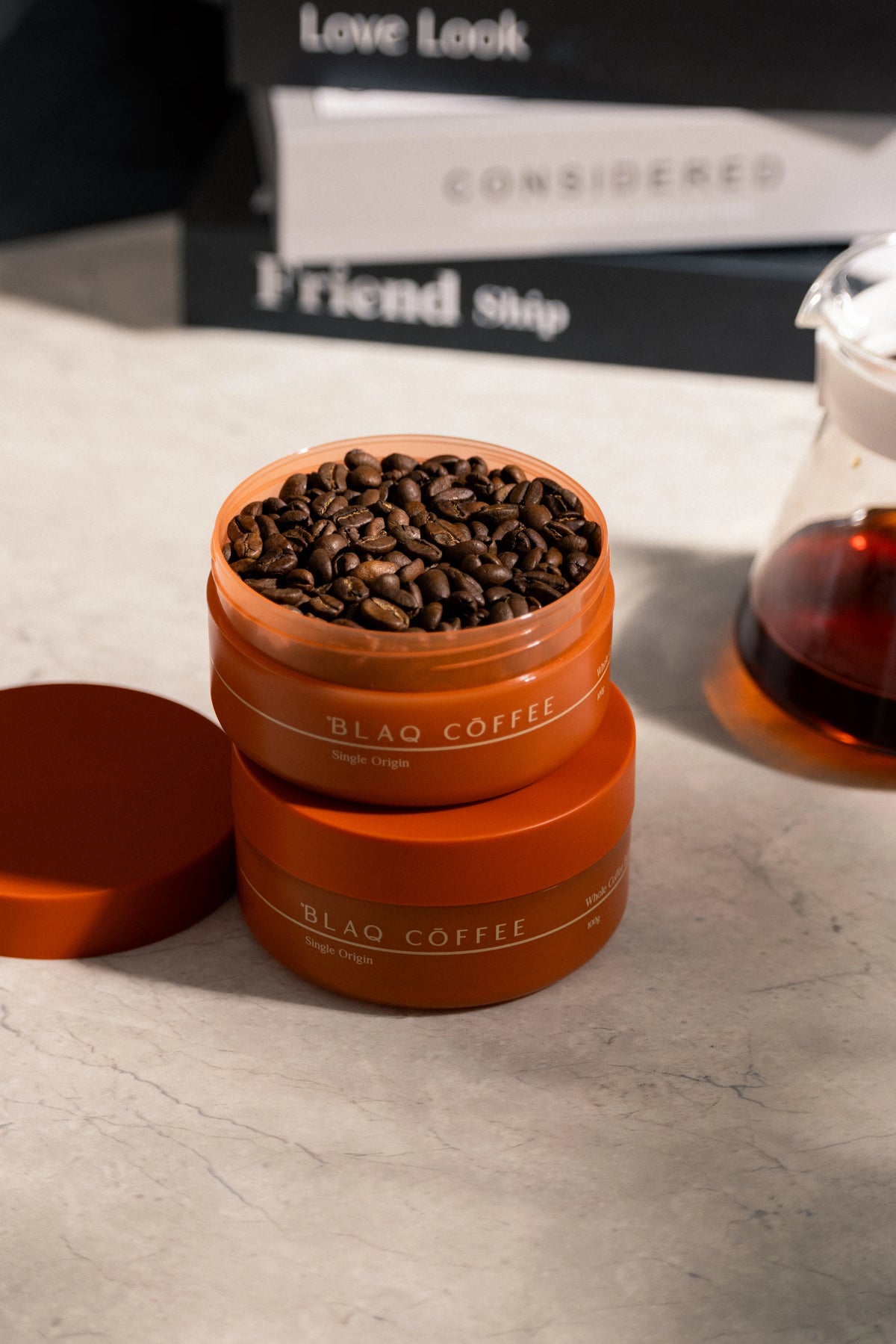
A field is not a factory.
Synthetic fertiliser feeds the plant and bypasses the soil. It works, for a while; yields climb, then the ground beneath them thins, compacts, and loses the microbial life that made it fertile in the first place. Each season needs a little more input than the last.
Organic farming feeds the soil and lets the soil feed the plant. Compost, mulch, nitrogen-fixing shade trees, and crop rotation rebuild the carbon and the biology that hold a hillside together. The result is land that still grows coffee in twenty years: terroir you can return to, not deplete.
Everything sprayed goes downhill.
Coffee grows on slopes, in the headwaters of the streams that villages downhill drink from. A herbicide applied at altitude does not stay where it lands. Rain carries it into the groundwater and, eventually, the sea.
Researchers who modelled the pesticides used across one Brazilian coffee basin, the Itapemirim, found concentrations reaching 123 micrograms per litre. The European limit for a single pesticide in drinking water is 0.1.
An organic farm has far less to send downhill. We should be precise about this, because most brands are not: organic growing is not chemistry-free. Copper is permitted against leaf rust, and copper accumulates in soil. What changes is that the list of what may be applied is short, published, and audited every year.
The person most exposed to a pesticide is never the one drinking the coffee. It is the one who grew it.Why we buy certified
Who handles the chemicals.
We talk about residue in the cup as though the drinker were the one at risk. The arithmetic is the other way round. A trace reaches the person at the end of the chain. The farmer mixes the concentrate, carries the tank, and breathes the spray, every harvest, for a working life.
Researchers who compared coffee workers in the Dominican Republic put numbers on it. Among those applying pesticides, six in ten reported difficulty breathing, against two in ten on the organic farms. Skin rashes, roughly three in ten against none. Gloves and masks were worn regularly by four workers in a hundred.
Choosing organic is, before anything else, choosing not to ask that of the people who grow our coffee. It is the part of the decision that never shows up in a tasting note, and the part we are least willing to compromise on.
The one you drink every day.
Most of what we eat, we eat occasionally. Coffee is not one of them. Two cups a day is seven hundred and thirty a year, and something like seven thousand across a decade. Nothing else in an ordinary diet repeats at that rate.
Which is a strange thing to leave unexamined in a house where everything else gets checked. A daily habit is the one place where a small difference has time to become a large one, in either direction.
It is also, for that reason, among the most studied things we consume. Populations followed for decades associate three to four cups a day with lower overall mortality, with less type 2 diabetes, and with markedly less liver disease. The pattern is consistent across large reviews, and it is not small.
You should hear the other half of that from us. Those are observational findings. When researchers use genetics to test whether coffee is the cause rather than the company it keeps, much of the effect thins out. Coffee looks good. It has not been shown to be the reason, and we would rather say so than let you believe we sell medicine.
What is firmer is narrower, and more useful. In a Norwegian study of half a million people, the mortality association held for filtered coffee and largely disappeared for unfiltered. Elsewhere it tracks coffee taken black, and does not survive much added sugar. Which is to say the daily cup is worth getting right in ordinary ways, long before anyone reaches for a certificate.
So organic is not what makes your morning good for you. Organic decides what went into the ground it came from, and who carried the cost of growing it. Those are terms we can govern, and we are unwilling to leave them to chance.
But it still leaves the question you actually came here with. Not what was promised on the farm. What is in the bag. For that, a certificate is the wrong instrument, and we stopped relying on one.
Nine hundred and fifty-two molecules.
A certificate tells you what a farm agreed not to use. It cannot tell you what is in the bag you are holding. Those are two different questions, and only one of them is answered by paperwork.
So we send the coffee to an independent laboratory and ask the other one. Each lot is screened against 952 pesticide and herbicide residues, by two methods, most of them to a hundredth of a milligram per kilogram. The panel covers what conventional coffee is actually treated with: chlorpyrifos and endosulfan for the berry borer, carbendazim and triadimefon for leaf rust, cypermethrin, imidacloprid, the 2,4-D esters. Ochratoxin A and the four aflatoxins are measured in the same bundle.
On the three lots published so far, every line reads the same. Not detected. Not at the limit of detection, and not below it either.
That is a different kind of sentence from the ones printed on most bags. It is not a promise about how the coffee was farmed. It is a measurement of the coffee you would be drinking, and the report sits on that coffee's own page in full, rather than summarised into a claim by us.
Mycotoxins are the clearest case. They are not a farming failure. They form after harvest, in humid transit and storage, and no certificate can see them. Organic status tells you nothing about them either way. That is precisely why we treat laboratory screening as a separate obligation rather than a flourish, and why five of our eight coffees are still waiting on their reports rather than borrowing someone else's.
Two bags can look identical on the shelf. What separates them happened years earlier, on the farm, and almost none of it is printed on the label.
Certification verifies practice, not the cup. We test the cup separately; green lots are screened for mycotoxins before roasting, and each report is published as its batch clears. Read the full method on Our Standard →
Documented, not assumed.
A certificate is the difference between a claim and a fact. To carry one, a farm submits to an annual audit by an accredited body: soil tested, inputs logged, a three-year conversion period observed before the word organic may be used at all. The absence of chemistry is recorded rather than promised.
Three of our eight coffees are certified organic: both Ethiopian lots and the Peruvian. We read labels: for oats, for olive oil, for everything we put in our bodies. It seemed strange that the drink we reach for first each morning had the thinnest labelling of all.
Our Malaysian Liberica is not formally certified. The estates in Taiping and Sarawak grow without chemicals, but certification is prohibitively costly for small Malaysian farms. Organic by practice is not the same as organic by certificate, and we will not blur the line. Where we cannot show you the paper, we tell you so.
Three honest caveats.
Not a medicine.
Organic coffee is not a treatment and we will not dress it as one. What organic changes is how a coffee was grown and who carried the cost of growing it. That is a smaller claim than the ones you will read elsewhere. It is the one that holds.
Not a flavour shortcut.
A certificate guarantees how a coffee was grown, not how it tastes. Flavour comes from varietal, altitude, processing, and a careful roast. Organic clears the way for the origin; it does not replace the craft.
Not the same as local.
Organic, single-origin, and traceable are three separate things, and we hold all three. A coffee can travel far and still be grown cleanly; what matters is that every step is documented, not that it is nearby.
What people ask us.
- Is Blaq Coffee certified organic?
- Three of the eight are: both Ethiopian lots and the Peruvian, each audited annually by an accredited body. Our Malaysian Liberica is organic by practice. The Taiping and Sarawak estates grow without chemicals, but formal certification is prohibitively costly for farms that small. The rest carry no organic claim, and we tell you which is which rather than blur the line.
- What does an organic certificate actually verify?
- Practice, not taste. A minimum of three years without synthetic fertiliser, herbicide, or fungicide before the word organic may be used at all. Soil tested, inputs logged, the audit renewed each year. It verifies how the coffee was grown; the cup is a separate question.
- Is organic coffee better for my health?
- Not in a way anyone has demonstrated, and we would rather tell you than imply otherwise. There is good evidence that organic diets lower the pesticide residues measurable in a person, sometimes within days. That work was done on food in general, though, not on coffee, and roasting destroys much of what might have been applied in the first place. The benefits we can stand behind land on the soil, the water, and the people who grow it. What is in the cup itself is a question for a laboratory, not a certificate.
- Does organic coffee have fewer mycotoxins?
- No, and be wary of anyone who says otherwise. The only direct comparison we know of found no meaningful difference between organic and conventional lots. Mycotoxins form after harvest, in humid transit and storage, which is a stage no farming certificate covers. It is why we screen each lot separately and publish the result.
- How much coffee is too much?
- European food safety guidance puts 400mg of caffeine a day, roughly four to five cups, within the range not associated with harm for most healthy adults. In pregnancy the figure is 200mg from all sources, and that one is worth taking seriously. Caffeine also raises blood pressure acutely, more so if you drink it rarely or already have hypertension, and it will keep you awake later than you think. We sell coffee. We would still rather you knew where the line sits.
- Why is most coffee not organic?
- Because the economics lean the other way. Growing organically costs the farmer more and yields less per tree, and certification adds an annual audit that most smallholders cannot fund. The supply that clears all three hurdles is small. That is the coffee we buy.
- Does organic mean the coffee is tested?
- No. Certification verifies practice on the farm; it does not analyse the finished coffee. We treat those as two separate obligations, so green lots are also screened for mycotoxins before they are roasted. The method is set out on Our Standard.
Eight coffees. Three certified, two grown the same way without the paperwork.
All single origin, all roasted to order in Kuala Lumpur, none of it blended to hide a weak lot. If you have read this far, you are the reason we buy the way we do.
- Certified organicThree of the eight, audited annually by an accredited body. Two are Malaysian Liberica, organic by practice, from estates too small to fund certification. The other three carry no organic claim.
- Screened, then publishedGreen beans go to an independent laboratory before roasting. The reports are on each coffee's page, whole, not summarised by us.
- Roasted to orderWithin 48 hours of dispatch, light to medium, never past second crack. The roast date is on the bag rather than a best-before.

