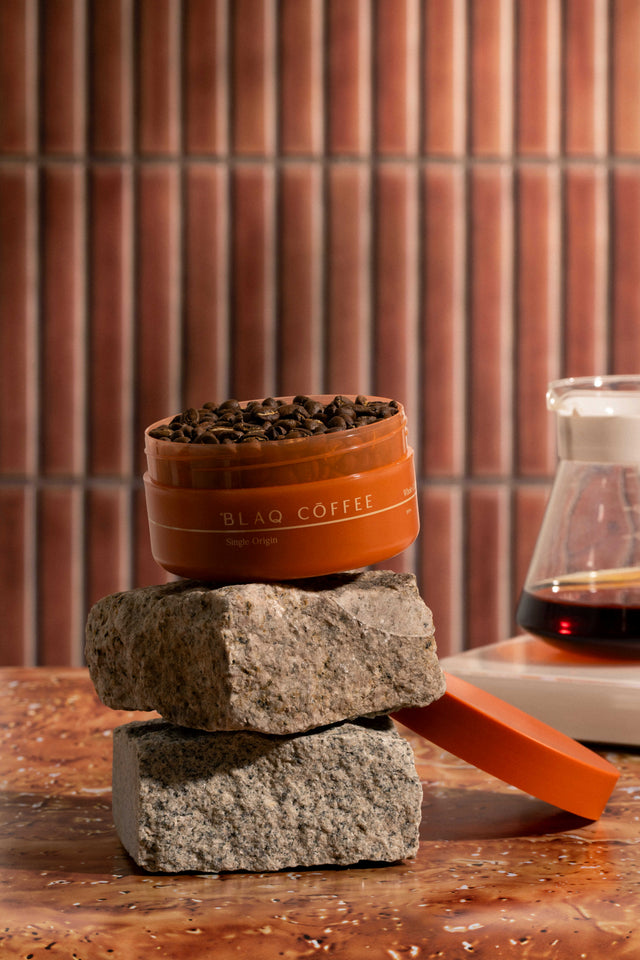
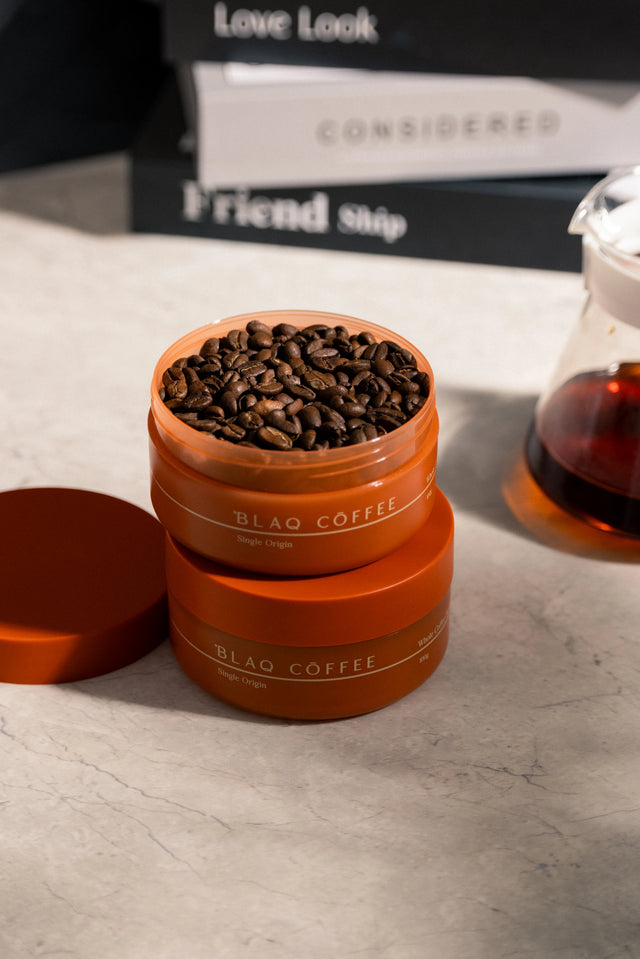
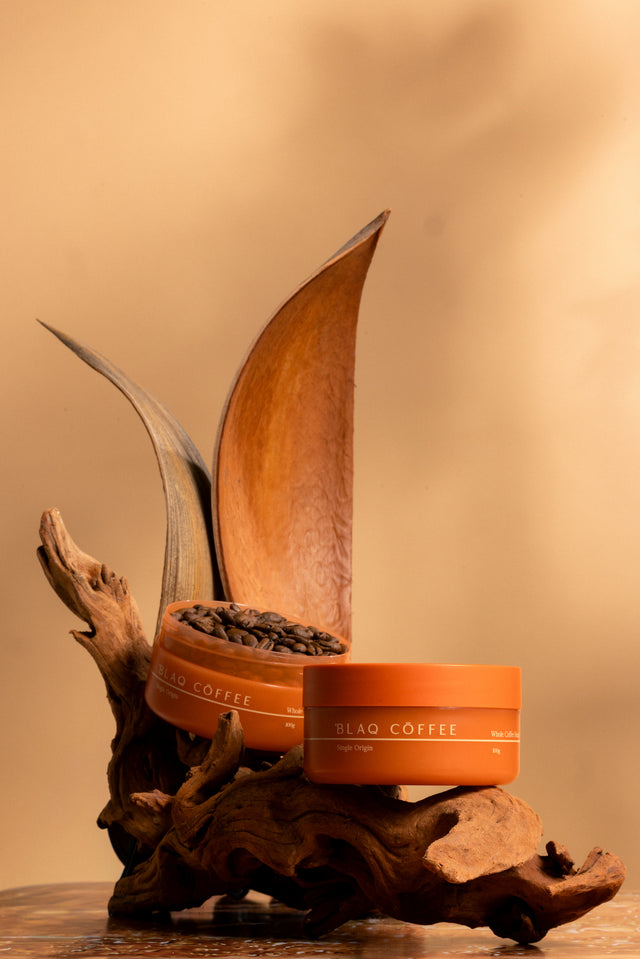
What goes into every tin.
Every coffee we carry comes from a farm that uses no synthetic pesticides, herbicides or fertilisers, so glyphosate is never sprayed on it. This page is what that rules out, what it costs, and how we check it.

Most coffee is grown with synthetic inputs and never checked afterwards.
Ours is grown without them, so without glyphosate, by farms we can name. Two of those farms are audited for it every year; the others tell us how they farm, and we say whose word it is. Then there is the part no certificate covers: ochratoxin A and aflatoxins, by-products of moulds that settle on green coffee during drying, transit and storage, commonly present and almost never measured at the roaster level.
So we sent green lots to independent laboratories accredited to ISO/IEC 17025, before they were roasted, and we publish each result against its batch. Ethiopia Kayon and Peru Palto carry a report; the others carry none and say so. Not because regulation requires it of a roaster our size. It does not. But because we drink this coffee too.
One farm, one lot, one harvest.
Every coffee we sell is single origin. One country, one region, one farm. We do not blend. Blending is useful for consistency and useless for traceability. If we cannot tell you exactly where a coffee came from, we cannot tell you what was done to it on the way here.
We buy directly where the relationship allows it. Where it does not, we buy through importers who share the paperwork. The chain from tree to bag should be readable, not a matter of trust.
Every coffee we carry is grown without synthetic pesticides, herbicides or fertilisers, so without glyphosate. Two of the farms hold organic certificates; the others tell us how they farm, and we say whose word it is. We carry a coffee when it earns the shelf, not on a schedule.
A constraint, not a badge.
Ethiopia Kayon and Peru Palto come from certified-organic farms. The certificate is not a marketing decision. It is a sourcing constraint that costs more and narrows what we can buy. The constraint is the point. It means the farm was audited, the soil was tested, and the absence of pesticides was documented rather than assumed. The certificates are the farms'; our roastery in Cheras is not a certified handler, so no tin carries a seal.
We read labels. For oats, for olive oil, for everything we put in our bodies. It seemed strange that the drink we reach for first each morning had the thinnest labelling of all.
Our Malaysian Liberica holds no certificate. The Long Banga estate in Sarawak grows without synthetic pesticides, herbicides or fertilisers, but certification is prohibitively costly for a small Malaysian estate. A growing practice is not a certificate, so we do not use the word organic for it, and we will not blur the line.
The Colombian coffees carry no certificate either. Finca El Diviso tells us it farms without synthetic inputs, and we repeat that as the farm's account, not as a claim of our own. They are on the shelf for the cup, and we say so rather than stretch a word that does not apply.
Sent out, before the roast.
When we send a green lot out, it is screened for ochratoxin A and aflatoxins B1, B2, G1, and G2: the five mycotoxins most commonly found in coffee. They are produced by Aspergillus and Penicillium moulds that colonise beans between harvest and warehouse, and Southeast Asian supply routes are particularly exposed.
Testing is done by independent laboratories accredited to ISO/IEC 17025. We do not test in-house, and we do not self-certify. Each report sits on the coffee's page and in the lab-results ledger. Two of our five coffees carry a published report today. Where a lot has not been screened, the space stays empty rather than borrow another result.

The audit ends at the farm gate.
Certification is a farm standard. An inspector walks the rows, reads the records, and confirms that what a grower agreed not to apply was not applied. Three years of it before the word may be used at all. That work is real, and it is why Kayon and Palto carry the mark.
It is also an account of one place, in one season, before the harvest moves.
Ochratoxin A and aflatoxins do not come from the field. They are by-products of moulds that settle during drying, in transit, and in storage. A humid container. A long sea crossing. A warehouse in a wet month. None of that sits inside the audit, because the audit ended at the farm gate.
So a certificate answers a question about practice. A laboratory answers a question about the bag you are holding. Two different questions, and only one of them can be measured.
We keep both. If we had to keep one, we would keep the result. A certificate tells you what someone intended. A result tells you what arrived.
Named, numbered, dated.
We roast in-house in Cheras, in small batches, each one named and numbered. Coffee is roasted to order, within 48 hours of dispatch, unless stated.
Every bag carries a roast date. Not a best-before, not a packed-on. The date the beans met the drum. Freshness is not a promise. It is a number you can check.
We roast light to medium across the range, never past second crack. The origin is the subject, and over-roasting buries it.

Made to be used twice.
The packaging has one job, protect the coffee, and then it should get out of the way. Everything we pack in is chosen to be reused or recycled, and we would rather you do the first before the second.
The print is minimal by design. What you need to read: origin, roast date, batch number. Where the lot has a lab result, it is downloadable on the coffee's own page. And nothing you need to peel off before the bin will take it.
The full account of what we pack in, and why, is on Sustainability.
Three refusals.
No decaf. Not yet.
Decaffeination that preserves quality and meets our standard exists, but not at a scale we can access affordably. When we find the right partner, we will offer it.
No flavoured beans.
No hazelnut, no vanilla, no pumpkin spice. The coffee is the flavour.
No gas-flushed stock.
We do not roast in advance and seal bags with nitrogen to stretch shelf life. If a bag is on our site, it was roasted this week.