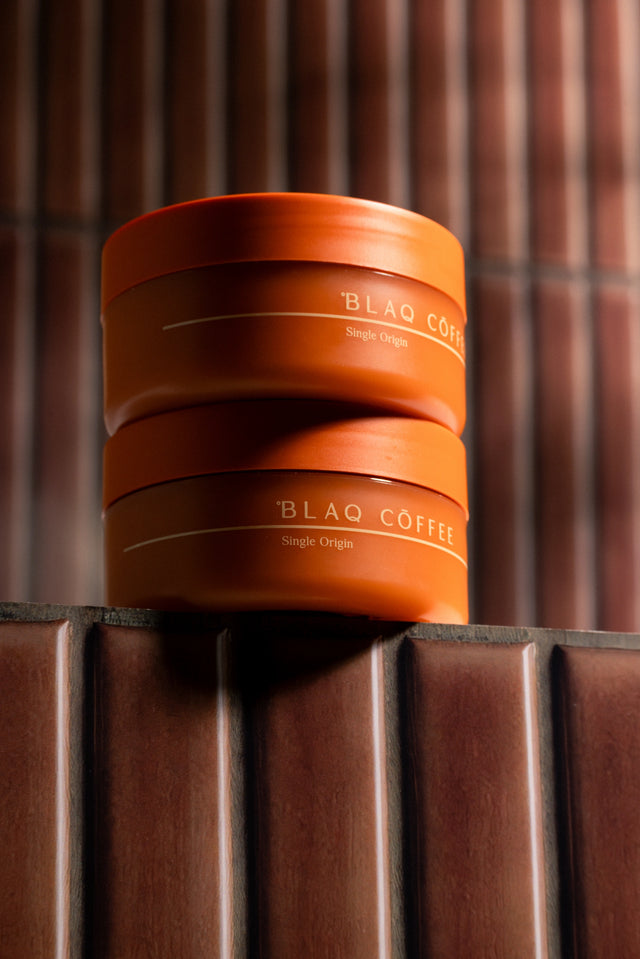
Coffee's rare third species. When leaf rust destroyed Asia's arabica in the late nineteenth century, farmers in Malaya turned to Liberica, and Malaysia never stopped growing it. A 2025 Kew-led study puts Liberica and excelsa together at probably under 1,000 tonnes, about 0.01 per cent of world coffee exports.
1 coffee
Postage RM7 in Peninsular Malaysia, free at RM80 and above. RM12 in East Malaysia and RM20 to Singapore, both free at RM150 and above. Elsewhere, calculated at checkout.
Long Banga Honey is the Liberica on our shelf. It comes from one small estate at Long Banga, in Sarawak's upper Baram. The trees are Libex, a hybrid of Liberica and excelsa that a Kew-led team named in May 2026.
It is honey-processed: the skin comes off and the fruit's mucilage stays on the bean while it dries in the sun. That is where the sweetness comes from. Tangerine first, then brown sugar and milk chocolate, with coconut underneath.
The estate grows without synthetic pesticides, herbicides or fertilisers. It has no organic certificate: it is too small to make one worth it, so we do not use the word.
Liberica doesn't taste like the coffee you know. Give it two mornings. Read the case for Liberica, or start with Liberica vs arabica vs robusta.
A washed and a natural from the same region. Two cultivars from one farm. The difference is the lesson.

Two of our coffees carry a published laboratory report: Peru Palto and Ethiopia Kayon. The coffee on this shelf is not one of them, and it is not scheduled to be. We would rather say so than borrow another coffee's result.
Rather not choose each time? A coffee of our choosing, roasted the week it ships, on your rhythm. The Standing Arrangement →

An occasional note on origin, roast, and the work behind the bag. Sent rarely. Read slowly.