Most coffee is not tested for the two compounds most likely to be in it.
Ochratoxin A. Aflatoxins B1, B2, G1, G2. These are mycotoxins. By-products of moulds that grow on green coffee during harvest, drying, transit, and storage. Small amounts are common. Very few roasters measure. Almost none publish their results.
Ethiopia Kayon and Peru Palto were sent to an independent laboratory before roasting, and their reports are published against the batch. This is the long version of our standard.
What mycotoxins actually are.
Mycotoxins are toxins produced by certain moulds. Specifically, Aspergillus and Penicillium species, both common, both opportunistic. The two that matter for coffee are ochratoxin A and aflatoxins. Both are regulated. Both are studied. Neither is exotic.
The European Commission sets the maximum at 3 parts per billion for ochratoxin A in roasted coffee, and 5 in instant. A part per billion is a vanishingly small amount. The fact that a limit exists at all tells you the compound is reliably present in coffee that has travelled across hot, humid latitudes. Which is most coffee, given where coffee grows.
Aflatoxins are classified by the International Agency for Research on Cancer as Group 1 carcinogens. The dose required matters enormously, and the dose in any single cup of coffee is not the dose researchers worry about. The issue is repeated daily exposure.
This is not new science. The food safety machinery in the EU and Japan has been measuring it for decades. The peculiarity is that specialty coffee, which prides itself on traceability and quality, has mostly chosen not to talk about it.
How they get into coffee.
Mould grows where there is moisture and time. Coffee, after harvest, has both.
A coffee cherry is picked at moisture levels of around 60 per cent. To be storable and shippable, it has to be dried to around 11 per cent. The drying step happens at the farm, on patios, raised beds, parabolic dryers, or mechanical units. Done well, it takes a couple of weeks. Done poorly, it is the most common point of contamination in the entire chain.
What happens next is transit. Green coffee is bagged in jute or grain pro and trucked to a warehouse, then a port, then a container, then a port, then another warehouse. A container in equatorial transit can sit on a dock at 35 °C and 85 per cent humidity for weeks. Mould loves that.
Storage at the destination is the second-most-likely point. A roaster's warehouse without climate control will compound any contamination already in the bag. The longer green coffee sits, the more risk it accumulates.
This is why high-altitude origins, where ambient humidity is lower at the farm, tend to fare better. It is also why Southeast Asian supply chains are particularly exposed: humid, long, multi-port.
Why most roasters do not measure.
There is no regulation in any major coffee-producing country that requires a roaster to test for mycotoxins. There is no industry-wide standard. Specialty coffee certifications, such as Q grade, SCA scoring and direct trade, are concerned with cup quality, not chemical safety.
Testing is not free. Each batch sent to an accredited laboratory costs between RM200 and RM600 depending on the panel. For a roaster running ten origins on a ten-day rotation, that adds up to several thousand ringgit a month, none of which can be passed to customers as a line item because customers have no idea testing is something they should be paying for.
So most roasters do not test. This is not malice. It is incentive structure. If your customers are not asking for the result, and your competitors are not publishing one, the marginal cost of testing buys nothing visible.
Ethiopia Kayon and Peru Palto were screened anyway. The others carry no report. The test exists for ourselves first.
Our testing protocol.
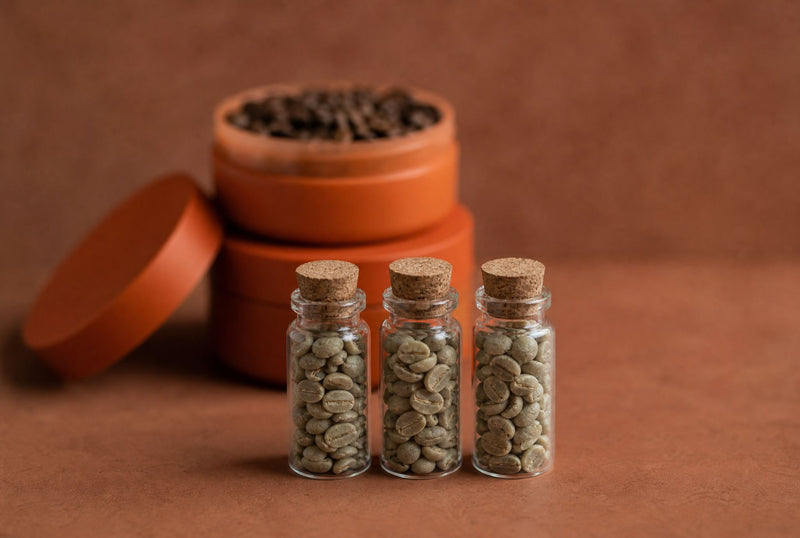
A sample of the green lot goes to an independent laboratory accredited to ISO/IEC 17025, before roasting. Ethiopia Kayon and Peru Palto have been through this and carry a published report. The other coffees on our shelf have not, and are not scheduled to be; their pages say so. We do not test in-house. We do not self-certify. The lab has no commercial relationship with us beyond the test fee. They report results in parts per billion against the international reference methods.
We test the green bean, before roasting, and hold each screened lot to our own thresholds:
- Ochratoxin A: below 3 ppb.
- Aflatoxin B1: below 2 ppb. The most potent of the four, and a Group 1 carcinogen per IARC.
- Total aflatoxins (B1 + B2 + G1 + G2): below 4 ppb.
For context, the EU's limits apply to finished coffee, not green: 3 ppb of ochratoxin A in roasted, 5 in instant, and no limit for aflatoxins in coffee at all. We test earlier than the regulated stage, on the green bean, where the contamination forms.
Every tin carries its batch number. Where a report exists, it is downloadable on the coffee's own page, whether it is flattering or not.
What the numbers actually mean.
A part per billion is one milligram in one tonne. Three ppb of ochratoxin A in your coffee means three milligrams of the compound across a thousand kilograms of beans, which is to say, an amount you cannot taste, see, or smell. The reason any of this is regulated is not acute toxicity but cumulative exposure over years.
EFSA's 2020 assessment found ochratoxin A commonly present in coffee on the European market, usually at low levels, sometimes above the limit. Aflatoxins turned up less often. The market is, statistically, a mixed bag.
A specialty roaster sourcing carefully and storing well will tend to test cleaner than the market median. Most do not measure, so most do not know. We publish every report we hold. Across the coffees tested, ochratoxin A and the aflatoxins came back not detected, reported against the laboratory's limit of detection. You can read the reports on the coffees that carry them, the Ethiopia Kayon and the Peru Palto.
That is what the numbers mean. They are usually fine. Occasionally they are not. The point is that you should be told.
Why this matters beyond one bag.
You read the label on a tin of olives. You read the label on a bottle of olive oil. You read the label on a bag of oats. You do this because the difference between one tin and another is real, and the only way to know is to look.
Coffee has historically been the exception. The bag tells you the country, sometimes the farm. It does not tell you what was measured. The roaster has not been asked, and so the roaster has not answered.
We do not see ourselves as ahead of the industry on this. We see ourselves as overdue. Specialty coffee has spent twenty years getting good at sourcing and brewing and roasting, and almost no time at all on the question of what is in the bag. The same care a careful eater brings to a tin of fish should apply to the powder you start the day with.
The label is the standard. Read it. Hold us to it.