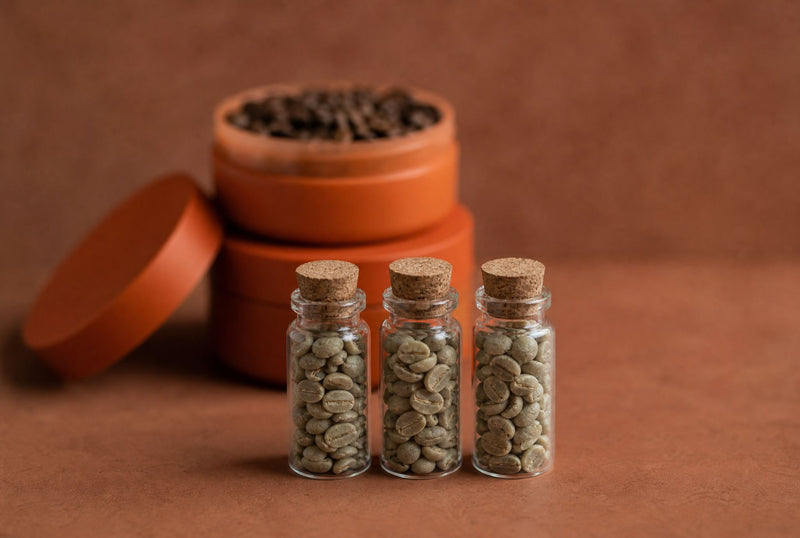
A coffee label should tell you nine things: species, farm or co-operative, lot, harvest year, process, roast date, altitude, certification status stated plainly, and whether the green coffee has been laboratory tested. Most bags carry three or four of the nine. What a label leaves out is usually the more interesting half.
A label is a set of promises a roaster is willing to be held to. Silence is also a position.
The nine things, and what silence means
| On the label | Why it is there | What silence usually means |
|---|---|---|
| Species | Arabica, robusta or Liberica. It sets the character of the cup before anything else does | A blend, or a species the seller would rather not name |
| Farm or co-operative | Someone is answerable for how it was grown | Bought on the open market, traced no further than an exporter |
| Lot | One picking, kept separate. It is what makes a score or a test result mean something | Pooled from several farms or several pickings |
| Harvest year | Green coffee ages. Last season's crop cups flatter and thinner | Possibly old stock, possibly not. You cannot tell |
| Process | Washed, natural, honey, anaerobic. Roughly half of what you taste | Commodity handling, or a detail nobody recorded |
| Roast date | The only freshness information that means anything | A best before date instead, which is a shelf-life estimate |
| Altitude | Slower ripening, denser bean, more acidity | Blended across elevations, or grown low |
| Certification status | Certified organic, or organic by practice, said plainly | The word organic without a certifier, or without a scope |
| Test results | Mycotoxin and pesticide screening, with a report you can read | Untested, which is the norm across the industry |
Roast date first
If you check one field, check this one. A best before date twelve months out tells you what the seller thinks the bag can survive. It says nothing about when the coffee was made. Roast date tells you where you are in the coffee's life. Whole bean, kept sealed, most coffee is at its best in the first month and perfectly good for a while after. Ground coffee runs the same clock in hours. The arithmetic is in how fresh your coffee should be.
Certification, stated honestly
Organic is a farm standard, verified by audit, and it costs money and years. Plenty of careful smallholders never certify, because the fees exceed what two hectares earn. The honest way to label that is to say so.
Our Ethiopian and Peruvian arabicas are certified organic. Our Colombian lots carry no organic claim. Our Malaysian Liberica is organic by practice: grown without synthetic inputs, on a farm too small to justify certification. We write it that way rather than borrowing the word. The distinction is set out in organic by practice, and what that actually means.
Watch for the word organic doing work without a scope. A roaster can be certified for one coffee and let the word drift across a whole range.
A worked example
Reading our own bag, the Sarawak Liberica Long Banga Honey. Species: Coffea liberica. Place: Long Banga, in the Kelabit highlands of Sarawak. Cultivar: Libex, a polyhybrid. Process: honey. Altitude: around 500 metres, which is high for Liberica. Certification: organic by practice, uncertified. Roast: to order, posted within two working days. Weight: 100 g whole bean.
What that label cannot say is that the lot carries a published test report. Three of our coffees do. This is not one of them, and it is not scheduled to be. A gap, stated rather than hidden.
The label is the standard
Nine fields is not a lot to ask. Every one of them is a place where a roaster could have said less and nobody would have noticed. The rest of ours is written down in our standard. What traceability has to mean to be worth anything is in what traceable coffee means.
The short answers
What should a coffee label tell you?
Species, farm or co-operative, lot, harvest year, process, roast date, altitude, certification status and whether the coffee has been laboratory tested. Most bags carry three or four of those nine.
What is the difference between roast date and best before?
Roast date says when the coffee was made. Best before is a shelf-life estimate set by the seller, often twelve months out, and it tells you nothing about freshness.
Does 100 per cent arabica mean good coffee?
No. It names a species, not a grade. Most of the world's commodity coffee is arabica. Farm, lot, process and roast date say far more about the cup.
What if the label only names a country?
It usually means the coffee was pooled from many farms. Country-level labelling is legal and common, and it makes traceability, cupping scores and test results much harder to verify.