The four things that age coffee
Air. Light. Heat. Moisture. Each one wears a coffee down in its own way. Oxygen stales the oils that carry aroma. Light and heat speed the same decline. Moisture invites trouble that has no place near a roasted bean. Control these four and you have done almost everything that matters.
Airtight and opaque
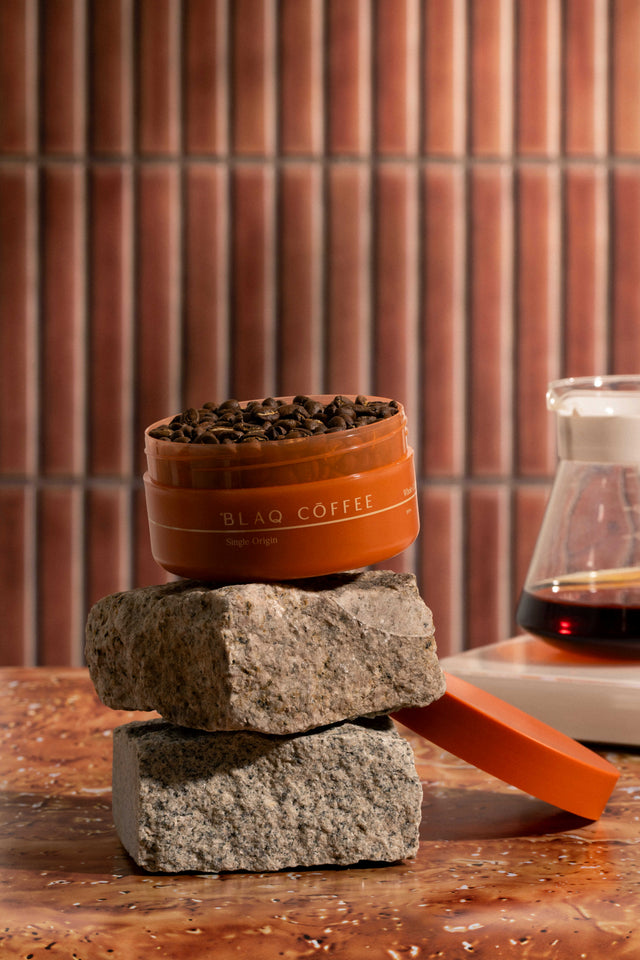
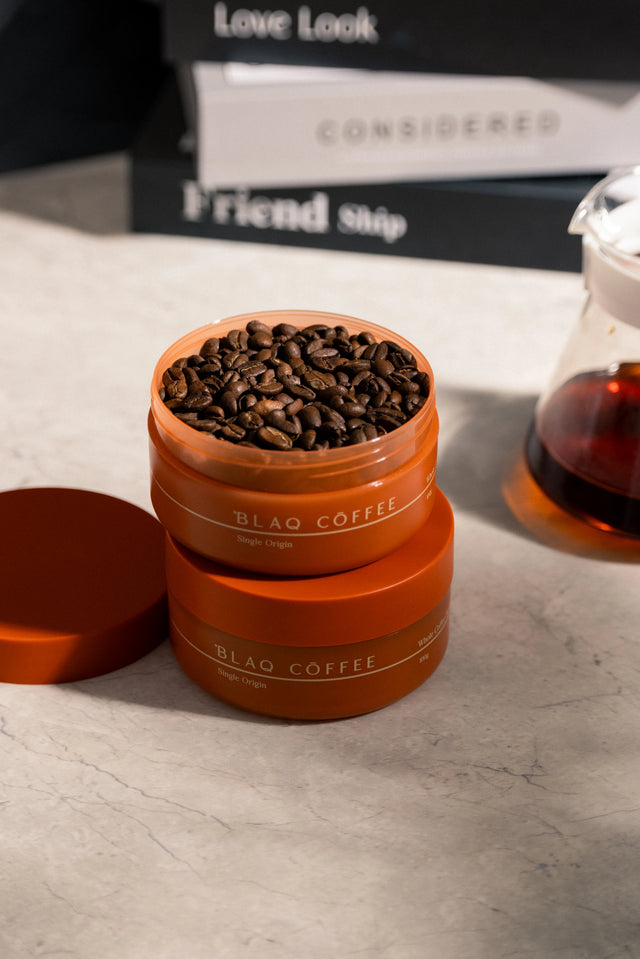
A sealed container with a good lid, in a material that keeps light out. Ceramic, opaque glass, a tin, a coffee canister with a valve. Keep it in a cupboard at room temperature, away from the hob and the kettle and the window. The bag your coffee arrived in, rolled down and clipped, will do for a short while. A proper canister does it better.
Whole until the last moment
This is the quiet one most people miss. Whole beans hold their aroma. Ground coffee gives it up fast, because grinding opens up surface, and surface meets air. Buy whole bean. Grind only what you are about to brew. A burr grinder at home protects more freshness than any container can.
The fridge and freezer question
Leave the fridge out of it. It is humid, full of competing smells, and the warm-cold cycle every time you open the door draws in moisture. Coffee does not belong there.
The freezer is more nuanced. Long-term, deeply sealed, never thawed and refrozen, it can hold beans you genuinely cannot use in time. But for the tin you drink from every morning, the freezer does more harm than good. Each trip out invites condensation. For daily coffee, a cool cupboard wins.
The simplest rule of all
Buy what you will drink in a few weeks. Storage slows ageing. It does not reverse it. A tin finished while it is fresh beats any technique for keeping an old one alive. This is also why we roast to order, and why every tin carries its roast date. The clock starts the day the beans leave the roaster. Storage just keeps it honest.
The short answers
What is the best way to store coffee? Whole beans in an airtight, opaque container at room temperature, away from light, heat, and moisture. Grind only what you are about to brew.
Should I keep coffee in the fridge? No. The fridge is humid and full of odours, and opening it cycles moisture onto the beans. A cool, dark cupboard is better.
Does freezing coffee keep it fresh? For long-term storage of beans you cannot finish in time, a deep, sealed freeze can help if never thawed and refrozen. For your daily tin, skip it. Buy amounts you will use within a few weeks.
Every tin we send carries a roast date, because freshness is a date, not a feeling. You can read how we think about it across the Journal, or choose your next single-origin coffee when this one runs low.